Thursday, 29 September 2022

Thai baht plunges to 38 against US dollar for first time in 16 years

The volatile Thai baht has depreciated to 38 against the US dollar even faster than foreseen by economists. The last time the baht reached 38 to the dollar was 16 years and two months ago on July 26, 2006.

The baht has hit the 38 mark even earlier than expected by the Head of Capital at Kasikorn Bank Kobsidthi Silpachai, who just a few days ago predicted that the baht would depreciate to 36.50 – 38 against the US dollar within the next month.

The baht’s depreciation is attributed to the rising strength of the US dollar. The dollar index has risen to 114, causing several currencies worldwide to depreciate. The US dollar continues to grow in value due to continued federal fund hikes.

The dollar has flown in 2022 amid the Federal Reserves’ aggressive interest rate hikes, Europe’s energy crisis, and China’s Covid-19 lockdowns. Cambridge University economist Mohamed El-Erian said the strength of the US dollar is bad news for the world economy…

“What is clear is we have this relentless increase in yields, this relentless appreciation of the dollar. They are both bad news for corporates and for the economy.”

Amid pressure from high inflation rates and the depreciating baht, Thailand’s Monetary Policy Committee will meet today to discuss raising the policy rate from 0.75% to 1%. The policy rate hike will increase interest rates between Thailand and the US with the goal of temporarily strengthening the baht and “supporting economic recovery.”

In the long term, Thailand is relying on the recovery of the tourism industry to strengthen the nation’s currency. K Bank predicts that the baht will rise to 35 to the US dollar before long as continually growing tourist arrivals pump money into the economy.

The Tourism Authority of Thailand predicts that Thailand will welcome a total of 9.3 million tourist arrivals in 2022.


Source: Bangkok Biz News / The Thaiger

YOUR AFFILIATE LINK HERE

.

Wednesday, 28 September 2022

Most in Thailand already using Digital Payments

Thai consumers are typically more enthusiastic about using digital forms of payments than the average for Asia, according to Mastercard.
Most Thai consumers have now gone digital when it comes to managing a range of personal financial matters, including paying bills, banking, opening new bank accounts and financial planning, a Mastercard survey has found.

Based on the Mastercard New Payments Index 2022, 81% of consumers in the country have used digital tools for at least one financial task in the last year, with paying bills (78%), banking (75%) and opening new bank accounts (64%) forming the top three.

The latest data on payment habits, attitudes and preferences was derived from a survey of 40 markets across five regions, including seven in Asia-Pacific: Australia, China, India, Japan, New Zealand, Thailand and Vietnam.

Interestingly, when it came to personal financial management, the survey found that Thai consumers were typically more enthusiastic about using digital forms of payments than the regional average.

This same enthusiasm extended to Thai consumers’ broader use of payments, with 94% having used at least one digital payment method such as digital wallets, QR codes, Buy Now Pay Later (BNPL), cryptocurrencies, biometrics and others in the last year, compared to the Asia-Pacific average of 88%.

As well, 80% of Thai consumers increased their usage of at least one digital payment method during the same period, demonstrating momentum.

“Although digitisation brings a broad array of benefits — greater access to e-commerce, more economic transparency, more security — in many ways it is in the everyday tasks where it makes a big difference,” said Aileen Chew, country manager for Thailand and Myanmar at Mastercard.

“In recent years, Thai consumers have increased their usage of digital payment options, often showing high engagement with new and emerging technologies. The survey results indicate that this comfort extends beyond payments, and now includes daily personal financial management, demonstrating the pervasiveness of digital technology in their everyday lives.

“This change is a positive sign for the continued digitisation of the economy, and will help to spur long term, sustainable growth in Thailand.”

When asked about their reasons for using digital methods to pay bills, convenience was the top response (85%) from Thai consumers, followed by the fact that it was seen as more secure or safe (61%), and that it gave consumers more control over their money (56%).

However, concerns remain about security, indicating an opportunity for service providers to offer consumers additional education and reassurance.

Thai consumers are also among the most enthusiastic in the region about using emerging payment technologies, with digital wallets leading (63%), followed by account-to-account payments (55%) and QR codes (54%), the survey found.

Also notable is that Thai consumers have been strong adopters of cryptocurrencies, with 25% using them to pay in the last year, compared to the regional average of 13%.


Source - BangkokJack

YOUR AFFILIATE LINK HERE

.

Friday, 9 September 2022

Airbus A380 lands at Thailand’s Don Mueang Airport for the first time ever

An Airbus A380 aircraft landed on the runway at Bangkok’s Don Mueang International rt (DMK) for the first time ever yesterday. The Emirates flight was redirected to Bangkok’s smaller airport due to heavy rainfall disrupting the runway at Suvarnabhumi Airport.

At 9.40pm, flight EK363 from Guangzhou in China descended on DMK after the runway became impassible at Suvarnabhumi International Airport, Thailand’s biggest and busiest airport. It is the first time an Airbus A380 has ever landed at DMK.

The plane circled Bangkok’s skies for 50 minutes waiting for weather conditions to improve, but they didn’t. Several flights were unable to land or take off at Suvarnabhumi for several hours last night due to heavy and continuous rainfall.

The aircraft landed safely on DMK’s west runway (21R) at 9.40pm before refuelling and flying over to Suvarnabhumi at 1.08am when the rain had subsided somewhat.

Heavy rainfall and flash flooding are expected to continue today and tomorrow throughout Thailand, according to the Meteorological Department.


Source: Dailynews 

YOUR AFFILIATE LINK HERE

.

Wednesday, 7 September 2022

Thousands STRANDED as Jetstar cancels flights

Jetstar is desperately working to get its planes back in the air after engineering issues forced the company to ground almost half of its fleet, leaving thousands of Australians stranded overseas.
The budget airline confirmed that, by the end of Tuesday, four of its 11 long haul Boeing 787 Dreamliners would be grounded to undergo emergency repairs.

One plane will return to service later this week with two more 787s to take to the skies next week, leaving only one plane out of operation.

A Jetstar spokesperson told Daily Mail Australia the fleet had been impacted by ‘a number of issues’, including a lightning strike, a collision with a bird, damage from an item on the runway and issues sourcing a part from the US.

‘The team is working hard to return these aircraft to service as quickly as possible however, safety remains our first priority,’ they said.

It’s understood more than 4,000 passengers have spent extra time in Bali after seeing their return flights with Jetstar either cancelled or delayed.  For the latest stories follow Bangkok Jack News on Twitter.

Some of those passengers were forced to wait up to five days to be put on another flight while others paid thousands of dollars to travel home with a different airline.

One woman from Melbourne, Meagan Mulder, said she, her husband and their two kids had a seven-hour delay in getting home, but the situation was much worse for the friends they’d travelled with around the Indonesian country.

‘We had 12 friends who were on the midnight flight (on Sunday) night, they had their flight cancelled, they can’t get another flight anywhere for seven people until Friday this week, so they’ve had to get more accommodation and everything,’ she told NCA Newswire.

Other friends she knew ended up spending $10,000 to fly via Kuala Lumpur with another airline.

Similar issues have been seen in Thailand with one woman from Brisbane due to fly home with her husband and two kids from Phuket on Saturday night only to find out their flight had been cancelled.

The family was told the next available flight was on September 12 – nine days after their original return trip, the Sydney Morning Herald reported.

For those stranded overseas, passengers will be given $150 per hotel room by Jetstar and $30 per person for food.

‘Our teams are working hard to get passengers on their way as soon as possible – we are putting on five special services to bring people home and booking seats on Qantas flights also,’ a Jetstar spokesperson said.

Flight credits or refunds have also been offered.


Source - BangkokJack

YOUR AFFILIATE LINK HERE

Friday, 24 June 2022

Looking for staff and new Dancers


SOI COWBOY - Bangkok, Thailand - YouTube

We looking / searching for several Bars in Soi Cowboy and Nana Soi 7 good looking staff and

#Dancers.

 เรากำลังมองหา/ค้นหาบาร์หลายแห่งในซอยคาวบอยและนานาซอย7 สต๊าฟและแดนเซอร์หน้าตาดี

Contact by mail or prefer with your Line ID

Mobile only to use for Line ID = +66877348855 ask for Lamduan

Or Line ID peter.bangkok


Sunday, 10 April 2022

The Story of Songkran - All about the Thai New Year

The Story of Songkran - All about the Thai New Year

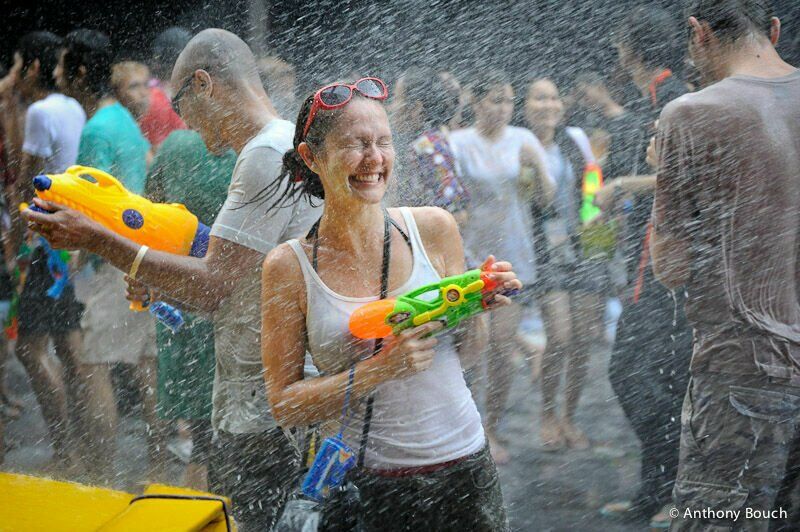
Songkran, or the Thai New Year, is the the largest and most famous of Thailand’s many traditional festivals. Known for huge water fights and water blessing ceremonies, it’s been celebrated for centuries and is rich in culture and tradition. Every year, the celebrations begin on April 13 and normally last three days until the 15th of April.

The name was inherited from ancient Sanskrit, a language that dates back thousands of years. Songkran combines the words “Song” and “Krant” and refers to the sun beginning a new Zodiac sign. Songkran translates to “entering” and “stepping into.” It’s when the sun exits the sign of Pisces and enters the sign of Aries. “Songkran month” is the event that occurs every month. But according to astrology, when the sun reaches Aries again after 12 months have passed, it’s known as “Songkran year” and will be the solar New Year’s Day.

The festival is highly dependent on water, which symbolically washes away the previous year, allowing people to prepare for the new year. It’s also a time of family reunion, when relatives who have moved away return for the holiday to spend time with their loved ones. During the festival, various traditions are celebrated; but the one tradition it’s most famous for is water splashing. Thai locals and travellers alike drench each other with water using hoses, squirt guns and any other water carrying container.

Locals believe that water is purifying and cleansing: it washes away negativity and problems, and brings good fortune and happiness. According to tradition, the festival began with villagers collecting water that had been poured over Buddha statues for purification. This was then used to bless leaders and family members who were well respected by sprinkling it over their shoulders. A similar tradition continues today with the water blessing ceremony, in which people fill shells with purified water and pour it on the hands of their elders as a sign of blessing and respect.

Songkran is a festival in which family members gather to express gratitude, love and respect, as well as to make merit and pay respects to their ancestors. Giving food to monks is a way of gaining merit. Visiting temples and listening to Buddhist speeches are also both considered a blessing during Songkran. Thais go to temples to pray and bring food to the monks. Locals splash scented water on Buddha statues when visiting different places. Many people also like spreading positive vibes by releasing caged birds into the sky or fish into bodies of water. This occurs throughout the country.

The northern city of Chiang Mai hosts the largest Songkran celebrations, with some events reportedly lasting six days. The infamous Khao San Road is the obvious centre of activities during Bangkok’s modern Songkran festival. The atmosphere in the backpacker zone is electrifying.

In a normal, non-pandemic year, it’s hard to leave your accommodation, whether a hotel or a condo, without experiencing the water soaking chaos and any resistance will quickly fade. On the streets, you’ll find multiple generations getting in on the fun, including children, adults, the elderly and trucks full of teenagers blasting loud music.

Songkran is a national holiday in Thailand. It’s a time for locals who have relocated to other cities or towns to return home and spend time with their families. So if you’re travelling to Thailand during this time, it’s smart to plan ahead because public transportation tends to be packed and accommodations fully booked — at higher than normal prices.


Source - The Thaiger

VISA AGENT  /  How to register for: THAI PASS - TEST & GO

Thursday, 31 March 2022

Songkran 2022: Bangkok allows “traditional water sprinkling”

Songkran 2022: Bangkok allows “traditional water sprinkling”
No foam parties or powder smearing will be allowed in Bangkok during Songkran next month, but when it comes to water splashing on the Thai New Year, known for massive water gun fights, the rules are a bit vague. “Traditional water sprinkling” is allowed, but officials did not go into detail about what exactly that means.

The Bangkok Communicable Disease Committee decided to allow “water sprinkling” in specific areas that have sought permission, and organisers must abide by “Covid Free Setting” measures set by the Centre for Covid-19 Situation Administration. Participants must stay at a Covid-safe distance of four metres and wear face masks. No alcohol is allowed.

The committee met yesterday to discuss petitions from local businesses to allow Songkran parties to beheld in popular tourist areas like Khao San Road. At the meeting, the Bangkok Metropolitan Authority decided to permit “traditional water sprinkling” activities within a “Covid Free Setting.” Water splashing in public areas and roads is prohibited.

If a Songkran event is expected to exceed a thousand people, the event organiser must obtain permission from the BMA’s Health Department, while local district authorities will grant permission for events with less than a thousand participants.

So far, the administration has received no more than eight requests from private firms and temples seeking permission to hold Songkran activities on their private grounds. Meanwhile, 46 out of Bangkok’s 50 district offices had declared they wouldn’t hold Songkran celebrations, and the other four district offices have not yet announced their decision, the Bangkok Post reported.

Earlier, the CCSA had agreed that water splashing and traditional water pouring as a blessing would be allowed at organised events — as long as there is no alcohol and events are under “Covid Free Setting” measures. Water splashing is not allowed on public areas, like roads. The government is focusing on allowing water splashing and pouring as a blessing at traditional Songkran events rather than the massive water fights the Thai holiday is internationally known for.

On Thursday, business owners in Bangkok’s popular walking street, Khao San Road, teamed up with tourism professionals from Pattaya, Phuket and Chiang Mai to draft and submit a joint petition urging the CCSA to repent of its party foul, fearing a loss of income.

The group has proposed a list of measures for screening and limiting Songkran party participants, according to the president of the association of business operators on Khao San Road, Sa-nga Ruangwatthanakul.

“We will put in place measures to handle party-goers on the 400-metre stretch of Khao San Road. We want to explain to the government that the country is trying to welcome tourists back, particularly in the summer when the Songkran festival will be held.”

“But the famous water splashing is banned. With such a ban, how can we attract them to the country? We ask the government to allow the activity on April 12 to 15 to promote the festival.”

Bangkok’s communicable disease committee met on Monday to consider their request and announced their decision on yesterday. Clerk Khachit Chatchawanit said the committee would “consider what is best for Bangkok residents.”

According to the law, provincial communicable disease authorities may ask the CCSA’s operations centre to remove the unpopular Songkran restrictions, which will then pass them on to the CCSA, according to the director-general of the Department of Disease Control, Opas Karnkawinpong.

The current Songkran precautions outlined by the Public Health Ministry say that festivities can still be held, albeit without the classic chaos of water fights and powder smearing in public, as well as no alcohol sales, according to a spokesperson for the CCSA, Apisamai Srirangson.

“Songkran events can still be held as long as the right precautions are taken, and people can travel to other provinces to visit their relatives and take part in traditional activities there.”

The CCSA’s current restrictions also encourage festival observers to practice traditional activities without water, such as bowing to elders at a distance of at least a metre, instead of pouring water on their hands as a sign of respect and blessing.

The restrictions, though well-meaning, fail to take into account the elderly’s desire to be blessed and honoured by their younger relatives, while also reflecting logical fallacies about the spread of Covid-19 among family members.

Notably, the water blessing ceremony usually takes place outside, where there is plenty of wind and UV light. Also, the ceremony only lasts for a moment, and everyone involved can wear masks, as is already normal practice in Thai society.

Source: Bangkok Post / The Thaiger

VISA AGENT  /  How to register for: THAI PASS - TEST & GO