Tuesday, 17 September 2019

Vietnam - Mastercard lists Hanoi, HCMC among top 20 Asia-Pacific travel destinations.


Hanoi is in 15th position and Ho Chi Minh City in 18th among Mastercard’s top 20 Asia-Pacific destinations for international travelers this year.

Mastercard ranked 161 cities in the Asia-Pacific based on the number of overnight international arrivals and travel spending, using data primarily from national tourism boards.

Last year Hanoi received 4.8 million overnight international visitors, who stayed for 3.8 days on average while the southern metropolis had 4.1 million arrivals who stayed for 5.3 days, according to the annual Asia Pacific Destinations Index drawn up by the U.S. payment company, released last Friday.

The average spending by foreign tourists was $78 a day in Hanoi last year and $98 in Saigon, much lower than in Bangkok ($184), Singapore ($272), Kuala Lumpur ($142), Phuket ($247), or Bali ($125), it said.
.
The top five destinations in the list were Bangkok, Singapore, Kuala Lumpur, Tokyo, and Seoul, welcoming over one-fifth, or 22 percent of all overnight visitors to the region’s top 161 cities and regional centers in 2018.

Last year the region received 342.2 million business and leisure visitors, up from 159.1 million in 2009, representing 8.9 percent growth annually.

During the period spending by travellers grew by 10.2 percent to more than double from $117.6 billion to $281.1 billion.
.
While many Asia Pacific destinations are basking in the growth led by mainland Chinese travelers, South Korea and Japan have also emerged as major source markets, the report noted.

Mainland China accounts for 18.2 percent of international overnight arrivals, South Korea for 9.1 percent and Japan for 6 percent.

"While the world's economic, geopolitical, technological and societal landscapes have all changed dramatically since Mastercard launched this research 10 years ago, one thing has remained constant: the desire of ever-growing numbers of people to explore the world beyond their own borders," Rupert Naylor, senior vice president of Mastercard Advisors in Asia Pacific said.

Last year HCMC and Hanoi were among the world’s 100 most visited travel destinations, a Euromonitor International report said.

Source - VN Express

Sunday, 15 September 2019

#Vietnam - Explore Ha Long, the land of 'descending dragons'


Tour guide Pham Huy Trung's photographs offer a glimpse of the unique charm of Ha Long Bay, a UNESCO natural heritage site in northern Vietnam. 
.
.
At around 3 a.m. fishing boats gather at a wharf in Ha Long Bay, adjacent to Hon Gai seafood market, after a long night out at sea. The wholesale market is open from early morning until 10 a.m., but its busiest time is between 7 a.m. and 9 a.m. when traders rush to buy the freshest fish.
.
Rocky islets amid mist at 6:30 a.m.
.
 The bay in Ha Long, which literally means "descending dragons," was formed by millions of years of geological activity, which created thousands of islets. It became a fixture on the world tourism map after being recognized as a world heritage site by UNESCO in 1994.
.
.A boat on the emerald green waters surrounded by limestone karst.
.
 While hordes of people come to explore the majestic beauty of the bay, not many know about the legend and mystery associated with it.

Legend has it that in the earliest days of the nation Vietnamese had to fight off hostile invaders attempting to enter through the sea. The Jade Emperor sent the Mother Dragon and her children to help the Vietnamese defeat their enemies.

The mother dragon and her children incinerated the enemies with their fire and emeralds, which scattered around the sea, creating an impassable barrier which sank the enemy’s battle fleet. Finally the invaders were repelled, and peace returned to the country. When the battle ended, the dragons did not return to heaven and instead decided to stay there.
.
.
 Besides luxury cruise ships, visitors can see the image of fishermen sailing on small boats to earn a daily living in Ha Long. Tour boats often stop at floating houses for visitors to get a glimpse of how the fishermen live. 
.
.
Most of the islets in Ha Long Bay are uninhabited; many of them are inaccessible to human visitors due to their sheer limestone cliffs.
.
.
British travel magazine Rough Guides last month listed Ha Long Bay as one of the 100 most beautiful places to visit next year.
In the "The Rough Guides to the 100 Best Places on Earth," it describes "the scattering of limestone pinnacles jutting out of the smooth waters of Ha Long Bay," around four hours east of Hanoi, as an "incredible sight."
.
.
 An overnight cruise trip has been recommended as a "must-try" travel experience in Asia by  the U.S. news site Business Insider.
.
Source - VN EXPRESS


Saturday, 14 September 2019

Thailand - TM30 not fit for purpose


In March, the Immigration Bureau resurrected the draconian regulation known as TM30 with the aim of keeping track of foreigners' whereabouts. It is legitimate to wonder whether any foreign criminals have disclosed their movements to authorities via the TM30 form.

The possibility seems unlikely, even though this is the ultimate goal of the latest enforcement of this regulation. What is certain, though, is that it has blighted the lives of law-abiding foreigners with a hellish web of paperwork.

Over the past couple of months, a broad spectrum of expat communities here have chorused their disagreement with the regulation, sharing experiences of how the law has made their stay in the country unnecessarily complicated and is affecting the ease of doing business and investment here.

This diverse feedback should be treated as strong enough evidence for Thailand to put an end to the hassle. And a solution could be as simple as amending the 1979 Immigration Act. But the outpouring of expat frustration seems to have fallen on deaf ears in government.

The regulation was made at a time when the country was facing an influx of Vietnamese and Cambodians fleeing conflicts at home, and authorities understandably wanted to keep an eye on them. This was also a time when the number of foreigners was just a small fraction of the current figure.

The Immigration Act's Section 38 requires that landlords must report the presence of any foreign tenants to authorities within 24 hours of their arrival.

Section 37 imposes the same rule on foreigners. They must report their nightly whereabouts, as and when they move around the country.

Failure to report means a fine of 800 to 2,000 baht and also the risk that the foreigner may be denied extension or renewal of their visa or work permit.

As time went by, the regulation fell into disuse, largely because it was no longer practical and too rigid. Reporting foreigners' whereabouts to authorities was mainly done by hotel operators on a weekly basis to comply with the 2004 Hotel Act.

In the absence of TM30 enforcement, the country had been efficiently managing expats and tourists via the hotel law and other immigration regulations. Everyone seemed to be happy, until the TM30 rule was dusted off and began baffling both Thai landlords and expats.

The Immigration Bureau has cited national security as the reason for enforcing the law again, expressing concern over foreign criminals who stay here for extended periods.

But immigration officials' mission to keep "bad guys out" must now be bogged down by the huge volume of paperwork triggered by the revival of TM30 rules.

Ensuring public safety is a noble cause. But it won't be achieved by applying the toothless and outdated TM30 regulation as a blanket measure that treats all foreigners as criminal suspects whose movements need to be strictly monitored.

Officials appear to have forgotten that this self-disclosure measure only affects law-abiding people. Criminals or terrorists will not be as naive as to tip off authorities about their movements or even inform their landlords.

Authorities must come up with alternative anti-terrorism and anti-crime strategies if they want to stay a step ahead of foreign criminals.

The TM30 has done more harm than good. The government and parliamentarians should push for amendments to the Immigration Act to do away with it.

Source - BangkokPost

Friday, 13 September 2019

#Vietnam named among world’s fastest growing travel destinations

American tourists walk on Bui Vien Street, a popular backpacker precinct in Saigon. 

Vietnam is the only Southeast Asian country among 10 world's fastest growing travel destinations, according to a United Nations report.

The country's tourism industry is moving in the right direction, and its 2018 visitor numbers rose at one of the fastest rates in the world, the 2019 Tourism Highlight report released by the United Nations World Tourism Organization (UNWTO) early this week said.

"In Southeast Asia, most destinations posted strong growth, particularly Vietnam. Outbound tourism from China and India fuelled growth in many destinations in the region."

Vietnam's foreign visitor numbers rose 19.9 percent to a record 15 million last year, putting it 10th in the list of fastest growers, which was topped by Ecuador with 51 percent. Iran was second with 49.9 percent and Egypt, third with 36.8 percent.

The rest of the top 10 were Uganda (31.9 percent), Comoros (28.2 percent), Nepal (24.8 percent), Slovenia (23.4 percent), Turkey (21.7 percent), and Palestine (20.5 percent).
 .
 .
  The report said France was the most visited country in 2018 with 89 million, followed by Spain and the U.S.

Thailand remained the region’s largest destination attracting around 38.2 million foreign arrivals.

The Asia-Pacific region had the second highest market share of 25 percent after Europe’s 51 percent. The Americas were third with 15 percent.

In the Asia-Pacific, growth was significant in Southeast and South Asia. Southeast Asia received 128.7 million visitors, a 7.8 percent increase, the highest rate in Asia.

"Growth in international tourist arrivals and receipts continues to outpace the world economy and both emerging and advanced economies are benefiting from rising tourism income," said Zurab Pololikashvili, secretary general of the UNWTO.

Tourism last year contributed 8.39 percent to Vietnam’s GDP. The government seeks to make the industry an economic spearhead.

 With visa waivers for several countries in Asia and Europe, the government expected to see around 20 million foreign visitors in 2020 and earn $35 billion in annual revenues by then, equivalent to 10 percent of GDP, according to the Vietnam National Administration of Tourism (VNAT).

Vietnam will become a leading travel destination in the next five years, the latest Asia Pacific Visitor Forecasts report released by the Pacific Asia Travel Association said.
.
Source - VN Express
 

Thursday, 12 September 2019

#Booking.com offers options for a ‘sneeze-free’ vacation


 Booking.com, a global leader in connecting travellers to a wide choice of places to stay, is delving into its more than 29 million listings in over 153,000 destinations to come up with six destinations where people can have a “sneeze-free” vacation.


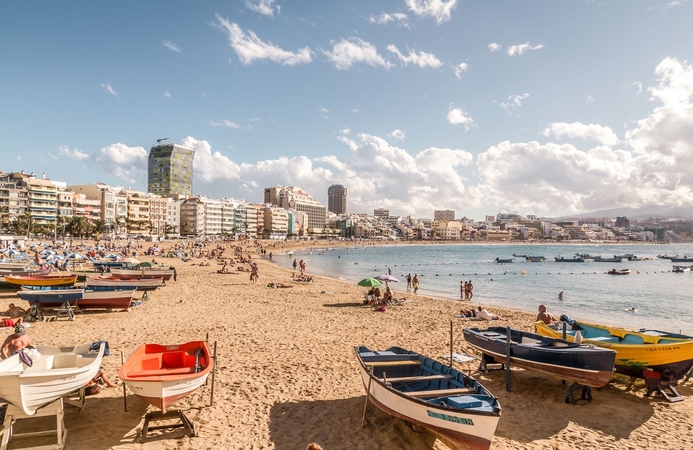
 Gran Canaria in Spain, which enjoys sunshine all year round, is a haven for travellers who suffer from hay fever as it has a very low pollen count. You can book a stay at B’SLOW San Agustin aparthotel, which offers picturesque views of the nearby Las Burras Beach.
.
.
 Or you can go for a cooler option and a breath of fresh air at Coronet Peak in New Zealand. Pollen cannot survive in snowy weather. One of the nicest places to stay is the Canyons B&B, which boasts sweeping views of the surrounding mountains, the Shotover River and Coronet Peak.
.
.
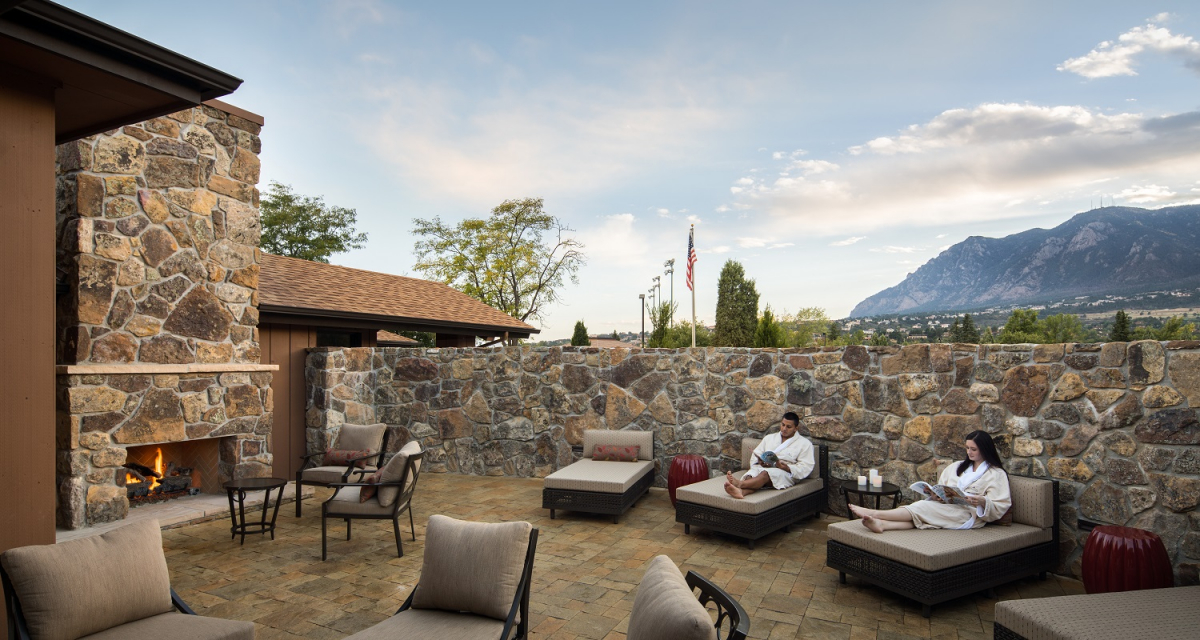
 If you plan to go to the US, you might consider Colorado Springs. In the summer and autumn months, especially July and October, the dry, desert-like surroundings contain few plants, allowing you to clear your head and give your itchy eyes a break. Breathe in crisp mountain air as you embark on a hike and take in popular sites and surroundings such as Garden of the Gods, Pikes Peak and the Broadmoor Seven Falls.
.
Offering stunning views of the Cheyenne Mountain, Cheyenne Mountain Resort Colorado Springs, A Dolce Resort boasts five swimming pools, indoor and outdoor tennis courts, a 25-acre lake for sailing and a full-service spa.
.
.
 For fresh Alpine air, you can head north to Whistler, British Columbia – a paradise for skiing and snowboarding enthusiasts and home to Whistler Blackcombe, one of the largest ski resorts in North America.

Whistler Mountain typically stays open for skiing and snowboarding until late May. If you’re looking to swap your snow boots for hiking boots, popular hiking trails include Lakeside Park, Cheakamus Lake and the Ancient Cedars Trail.

The place to stay is Whistler Lodge Hostel, which offers affordable accommodation in an ideal location.
.
.
 Meanwhile, the heavy rainfall, short pollen season and few trees in the Scottish Highlands can provide a retreat for travellers suffering from hay fever. The surrounding moorlands and mountain terrain also provide respite as the vegetation is relatively free of allergens.
.
  The place to stay is the Air an Oir – Skye Self Catering holiday home in Portree, which offers stunning sea views and a revitalising breeze of salty fresh air. During your stay visit the quaint Portree Harbour and marvel at the famed rugged landscapes with a hike across Lealt Falls.
.
Source - The Nation


Tuesday, 10 September 2019

Thai government introduces new TM30T, to keep track of Thais

One of the new test shopping centre locations for the new Waer Areuw program

The Thai government is introducing a new method of cracking down on home-made criminals.
In a reversal of its former policy “Good guys in, bad guys in”, the government’s criminal enhancement department is phasing in the new laws that will require Thai to report their location every time they stay overnight in a different location.

Spokesperson Phaec Than says the new policy will be called the TM30T, alluding to the highly successful TM30 form that has rid the Kingdom of foreigners.

“99% of crime in Thailand is by Thais so we believe that keeping a track of our population is vital,” says Phaec.

The new TM30T form will require Thais to report to the new Waer Areuw shops that will be set up in each province and some shopping centres. Locals will be required to report in their location within 24 hours if they have moved from their registered address. Workers, who travel more than one kilometre to work, and stay overnight, will be required to report their new location within 24 hours. And then on return.

Along with the new Waer Areuw reporting locations, there will also be a new App so people can conveniently report their new location.

“The App is safe and convenient and will be able to scan and send the 96 pages of documentation for your 24 hour reporting.”

“If you are staying with a foreigner, they will have to lodge the paperwork for you. We don’t think this should take any longer than 2-3 hours.”

Minister for criminal enhancement, Thelmee Ware Uah, says that if the new TM30T reporting is successful in reducing crime they may take the next step and issue all Thais with a convenient electronic ankle bracelet so the government can track their whereabouts, 24/7.

“We have seen some of these new wearable electronic ankle monitors. They come in a range of colours and styles and have a selection of matching handbags and umbrellas to turn ‘big brother surveillance’ into day-to-day fashion.”

The new TM30T form is a complete fabrication invented by The Thaiger.


Monday, 9 September 2019

#Vietnam - Pure Land pagoda’s unique bamboo gate


Also known as Hien Mat Pagoda, it is in Long Khanh Town and adheres to Pure Land Buddhism. This branch of Buddhism is characterized by the teachings of Amida Buddha, the Buddha of Infinite Light. The pagoda attracts many pilgrims.

A small bridge created entirely out of bamboo crosses over a stream at the entrance, and its railings and arch are all made of bamboo, making it stand out from other pagodas in Vietnam. On both sides of the gate are sal trees, which are associated with the symbol of the Buddha.
.
.
 In Buddhism in Vietnam, bamboo trees growing in lumps symbolize the gathering of believers. Having one bamboo node after another resembles a ladder to the sky.

According to the monks there, before the pagoda was built, the path leading to its location had many large bamboo fields, which inspired the creation of the gate.
.
.
At the top of the pagoda gate is an idol of a Bodhisattva sitting on a lotus throne, surrounded by apricot and sal trees.
.
.
On entering the gate, two bell towers set in concrete pillars come into view. At their top are two bottle gourds representing vases of fairy wine for the bodhisattvas. 
.
.
Behind the two towers is the octagonal-shaped main hall with red tiles in the middle of a large garden. The pagoda monks said the octagon represents the eight-fold path leading to liberation from human suffering.
.
.
The main hall is about 30 square meters with small idols and paintings of bodhisattvas.
.
.
Hien Mat Pagoda has no stupas or large idols like other pagodas in Vietnam. It sits on a large lush area with many gardens that represent Buddhist concepts. One of them is the deer garden, which represents the place where the Buddha gave his first sermon under the Bodhi tree.
.
.
This pond recreates the Anoma River in southern Nepal, where the Buddha cut his hair and turned ascetic.
.
.
An idol with porcelain pieces. There are a few that look like this out of the many idols in various shapes and sizes.
.
.
The pagoda also has many rocks. According to the monks here, the rocks were mainly found and donated by local farmers. Some were given as donations by Buddhists from other regions.
.
.
Work on the 10,000 square meter pagoda complex, which sits next to rice fields, began in 1984, but it is not clear how long it took to finish. 

Source - VN Express