We provide you with all Travel, Hotel and Resorts information in Asia. Especially in Cambodia, Vietnam, Thailand, Laos, Myanmar, Indonesia, .......
Monday, 2 November 2026
THAILAND WELCOMES 25 MILLION FOREIGN TOURISTS IN FIRST 10 MONTHS
BANGKOK – Thailand welcomed nearly 25 million foreign tourists from 1 January to 24 October, generating more than 1.21 trillion baht in spending, although arrivals remained 4.43% lower than the same period last year, according to the Ministry of Tourism and Sports.
Sunday, 1 November 2026
Thailand targets on 4 trillion baht: ambitious tourism plan, but doubts remain regarding its feasibility
BANGKOK — The National Tourism Policy Committee (NTPC) has set the course for the 4th National Tourism Development Plan (2028–2032). During a meeting chaired by Deputy Prime Minister Supachai Sutthampan, an ambitious goal was unveiled: generating at least 4 trillion baht in tourism revenue and securing a spot in the top 30 of the Travel & Tourism Development Index (TTDI). While these figures are certainly designed to impress, a concrete roadmap for achieving them is still missing.
Grand words, few details
Khun Lalida Pertwivatana, deputy government spokesperson, has reiterated the familiar rhetoric that tourism remains the engine for sustainable economic growth. Grand promises regarding quality improvements and the attraction of high-net-worth travelers sound all too familiar—as does the pledge that small-scale entrepreneurs would also benefit, a claim that has remained unsubstantiated in previous plans.
How credible is the implementation?
There is a renewed focus on "better infrastructure"—such as expanded facilities for cruise ships and marinas—though it remains unclear who will fund these projects or within what timeframe. The Tourism Authority of Thailand (TAT) has yet to consult with various relevant agencies; in Thailand, such consultations can often drag on for years before yielding anything concrete.
Similarly, the announcement of a provincial calendar of events and plans to attract travelers from neighboring countries like Malaysia, Vietnam, and Singapore feels largely like a repackaging of existing policy. Whether this approach will truly propel Thailand to the global forefront, or whether it will remain nothing more than an ambitious plan on paper, remains to be seen.
Tuesday, 27 October 2026
Thai hotel sector faces rising closures after widespread losses
Thai hotel closures rose 42% in the first nine months of 2026 after 51% of operators posted losses in 2025, with KResearch warning of further pressure in 2027.
Thailand’s hotel and accommodation sector is facing mounting pressure from weak tourism demand, rising competition and high operating costs, with business closures accelerating after more than half of operators reported losses last year.
KASIKORN RESEARCH CENTER (KResearch) said 148 hotel and accommodation businesses registered their closure during the first nine months of 2026, up 42% from the same period a year earlier.
Meanwhile, about 51% of operators recorded losses in 2025, with smaller businesses the most vulnerable. Around 54% of small operators were loss-making, while 42% had accumulated losses for three consecutive years from 2023 to 2025. Overall, 38% of hotel and accommodation operators recorded accumulated losses throughout the three-year period.
KResearch warned that the outlook for 2027 remained highly uncertain as the tourism recovery stays uneven, competition intensifies and operating costs face further upward pressure.
Hotel market grows, but recovery remains uneven
Thailand’s hotel and accommodation market is expected to be worth about THB1.1 trillion in 2026, up 2.6% from 2025.
Accommodation accounts for about 77% of sector revenue, with the remaining 23% coming from areas including catering, meetings, seminars, food and beverages.
The industry comprises about 15,000 operators, more than 98% of them small and medium-sized businesses, and employs around 430,000 people. Its market value is equivalent to about 5.7% of Thailand’s gross domestic product at current prices, according to KResearch.
Despite overall revenue growth supported by international meetings and conferences and continued domestic travel, the recovery has not been evenly distributed.
New business registrations also slowed. A total of 779 hotel and accommodation businesses were established during the first nine months, down 31.2% year on year, although the figure remained above the comparable level in 2024.
Source: TheNation
Wednesday, 7 February 2024
#Agoda reveals hotspots: #Bangkok heats up rankings
Agoda unveiled the hottest must-visit destinations with the Big Mango, Bangkok sizzling in second place.
Japan, Thailand, and Vietnam emerged as the unrivalled favourites, igniting a tourism frenzy in the first month alone. Moreover, Malaysia and South Korea are hot on their heels, rounding up the top five inbound markets.
According to Agoda’s January 2024 booking rankings, Asian travel destinations have kicked off the year with unparalleled vigour. Zooming into city-specific allure, Japan’s magnetic hubs Tokyo and Osaka continue to allure adventurers, maintaining their stronghold from the previous year.
Bangkok (No.2), Seoul (No.4), and Kuala Lumpur (No.5) also clinch spots on the coveted list, underscoring the charm of Asian metropolises. This data shines a spotlight on the burgeoning fascination with both established icons and urban gems across the continent.
Omri Morgenstern, the Chief Executive Officer at Agoda, shared his insights.
“The irresistible allure of markets like Japan, Thailand, and Vietnam, and the magnetic pull of cities such as Tokyo and Bangkok, continue to captivate adventurers globally. With tourism topping the agenda of numerous established and emerging destinations, 2024 promises to be a stellar year for travel enthusiasts. At Agoda, we’re committed to fuelling this excitement by offering travellers unbeatable deals, making globe-trotting dreams a budget-friendly reality.”
A comparative analysis of accommodation searches between January last year and January 2024 reveals India as the unrivalled champion in soaring popularity, reported Antara News.
Following suit, Hong Kong, Taiwan, Vietnam, and Italy have showcased remarkable surges compared to the previous year.
Source: The Thaiger & AGODA
Saturday, 3 February 2024
#Pattaya ranked as 7th Best of the Best Destinations
Popular online travel platform Tripadvisor ranked Pattaya in Thailand 7th in the Travellers’ Choice Awards Best of the Best Destination for 2024, suggesting the beach city is the perfect choice for great resorts, outdoor activities, cabaret and cultural tours.
Tripadvisor’s Travellers’ Choice Award Best of the Best for 2024, is divided into five categories including destinations, restaurants, beaches, hotels and things to do. The list is based on reviews and opinions from Tripadvisor users over the past 12 months.
Pattaya, on Thailand’s eastern Gulf coast, was ranked 7th in the destinations category, with the website claiming that only 1% of Tripadvisor listings could make its name.
Tripadvisor highlighted Pattaya’s must-see attractions, including the famous Jomtien Beach, Khao Phrabat Temple, Sanctuary of Truth and the city’s lively entertainment venues. The Sanctuary of Truth was also recently chosen as the location for the action sci-fi film, The Creator.
The platform suggests that travellers to Pattaya, the second-largest city in the Chon Buri province and the eighth-largest city in Thailand, can expect great resorts, outdoor activities, cultural tours, and cabaret performances.
Source: The Thaiger
Monday, 27 November 2023
Visa-free Travel policies boost global tourism and economy in #Thailand
Countries worldwide are recognising the importance of travel freedom in bolstering their economies and accelerating the recovery post-pandemic. As tourism and trade flourish without border restrictions, governments are implementing strategies to enhance their tourism competitiveness, such as visa-free travel policies and the digitalisation of pre-travel processes.
Prominent countries like China and India, with their vast populations, are primary targets for countries seeking to increase their visitor numbers. Last year, Kazakhstan introduced a visa-free scheme for Chinese, Indian and Iranian visitors, and China reciprocated for Kazakh visitors. Likewise, a mutual agreement was signed allowing Maldivian and Chinese tourists visa-free travel from this year. Additionally, Sri Lanka granted temporary visa-free travel to seven countries, including China and India.
Thailand’s government also offers a temporary visa exemption for visitors from China, India, Kazakhstan, and Taiwan, with a 30-day stay per entry. The visa-free travel policy resulted in a 26% increase in searches for Thailand among Indian and Taiwanese travellers, according to online travel agent Agoda. The country currently allows 61 countries and territories to visit without a visa.
Adith Chairattananon, honorary secretary-general of the Association of Thai Travel Agents, believes visa exemptions will contribute to tourism momentum into the next year. The exemptions, he says, will help dispel negative images about Thai tourism and convince potential tourists they are welcome.
Extending the period of stay can also spur tourism expenditure. For instance, Malaysia extended the stay period for Hong Kong nationals to 90 days, up from 30, while Vietnam revised its visa-free stays to 45 days from 15 for certain nations.
Source - The Thaiger
Friday, 10 November 2023
Phuket tourism operators push for international convention centre
Wednesday, 1 November 2023
#Thailand voted best tourist destination outside Europe
Thailand has been recognised as the “Best Destination Outside Europe” at the Danish Travel Awards 2023, marking the first time the country has received this prestigious award.
The Danish Travel Awards, organised by Travelmedia Nordic, the leading digital travel media platform in the Nordic region, has been recognising outstanding contributions to the travel industry for 26 years. The event, which was held in Copenhagen on October 4, was attended by over 500 professionals from the travel, tourism, and aviation sectors.
Thailand received the award based on a survey conducted by Epinion, a Danish analytical institution, among 3,000 Danish consumers. The awards were divided into three categories: airlines and travel, hotels and tourism in Denmark, and foreign tour operators.
In addition to the main categories, five special awards were introduced this year, including:
1. Best Budget Airline
2. Best Beachfront Hotel in Denmark
3. Best Camping Site in Denmark
4. Best Tourist Attraction in Denmark
5. Best Destination Outside Europe
Thailand's success in securing the “Best Destination Outside Europe” award underscores its popularity among Danish tourists. According to data from January to September of this year, more than 19 million foreign tourists visited Thailand, including over 80,000 Danish tourists during the first half of the year, a significant increase compared to last year.
It is anticipated that the number of Danish tourists travelling to Thailand will continue to rise during the upcoming winter season. Thai businesses can leverage this opportunity to enhance their products and services to meet international standards and cater to the preferences of the target audience, thus expanding their market presence.
Source - The Nation
Thursday, 8 December 2022
Christmas present to Phuket motorists: Patong Hill road to reopen
Good news for motorists in Phuket, Patong Hill road is expected to fully reopen to all traffic on Christmas Day.
The road between Kathu and Patong was closed after it was hit by a landslide during a deluge of heavy rain in October. The road is only partially open at the moment but the Mayor of Kathu, Chai-anan Sutthikul, reported today that repairs to the road were almost finished, said Bangkok Post.
“The road’s foundation has been filled and strengthened and repair work is almost done.
“When completed, the road’s width will be increased by 7 metres in that section, making it safer, stronger and more durable.”
The mayor revealed he expected the 21 million baht project to be finished before December 24 and within the 45-day timeframe set in the contract.
“If there is no rain, the work could even be finished on December 20.”
The Provincial Electricity Authority’s Phuket office announced it will install new power poles and CCTV to monitor the repaired section of the road.
A survey on November 7 revealed that about 70,000 round trips were made on the hill road each day, about 35,000 each way.
A landslide caused the Kathu-Patong Road to close on October 19 causing chaos to motorists and travellers trying to reach Phuket Airport. Road workers were able to clean up and stabilise the roadway to allow motorbikes to pass in both directions over Patong Hill a week later on October 26.
Then on November 4, small cars were permitted to travel over Patong Hill before the road was fully reopened to vans and pickup trucks with restrictions.
The mayor said the two alternative routes to Patong beach – Go-kart in Kathu district to Chao Phor Sue shrine in Patong, and Wat Bang Thong in Kathu to Chao Phor Sue shrine – were not far from Patong but the roads were rather steep and were best used in times of emergency.
Chai-anan added that he is still in talks with the provincial electricity office about installing lighting along the two routes.
Source - The Thaiiger
YOUR AFFILIATE / REFERRAL LINK HERE
Monday, 28 November 2022
Bangkok - Why aren’t tourists returning to Khao San Road?
The past few years have been dark for tourism in Thailand and around the world. The Covid-19 global pandemic closed borders and killed tourism in so many crucial areas. Khao San Road, the vibrant, bustling backpacker haven of Thailand’s capital city of Bangkok quickly fell into a desolate ghost town. Now, the last pandemic restrictions have been lifted, and the government is constantly reporting floods of international tourists bringing Thailand back to life. But vendors on Khao San Road say they’re just not seeing the tourism numbers that were predicted even as all Covid restrictions have been lifted.
The popular tourist neighbourhood took a beating when restrictions started rolling out. Bars were among the first businesses to close, and authorities did everything they could to prevent poorly ventilated crowded places to operate in the face of airborne disease. So Khao San Road – packed densely full of eating and drinking backpackers and cafes, street bars, and shops crowding them for their business – was a prime target to be shut down for most of the pandemic.
The Bangkok Post recently interviewed vendors on the street now though, and they all say that they have not seen the crowds come surging back even as the last of the pandemic restrictions were lifted last month. They are calling on the government the launch tourism campaigns luring international travellers back to Khao San Road and the surrounding area. One vendor selling clothing in a street stall appealed to foreigners to return.
“We’re still waiting for them…. come back to Khao San. We still need all of you. There are few foreign customers today. Before the pandemic, I earned around 5,000–6,000 baht a day, but now I earn just 1,000–2,000 baht a day. After the pandemic, most foreign tourists are more careful with spending. It’s even harder to close a sale each time. They want me to give them a big discount.”
Vendors called on the Bangkok Metropolitan Administration and the Tourism Authority of Thailand to focus their efforts on raising awareness of unrestricted travel in Thailand. They also want help promoting that while many costs have skyrocketed in the industry, accommodation is still affordable on Khao San Road, and the area is linked to plenty of tourist attractions. The road lies just a short walk from the Grand Palace and Wat Phra Kaeo. Great shopping, dining, and other attractions are just a short hop away.
A pad Thai seller said she was happy to be back on Khao San Road for the first time since the pandemic, even though she is earning half as much as before. But she called on the government to support the area, promoting holidays and events. Before the coronavirus, Khao San was packed for every special event or holiday.
“We have not celebrated the new year and the Songkran festivals together for two years. So, the government must organise these two big events next year and should regularly promote events every holiday to encourage tourists to visit.”
Source - The Thaiger
YOUR AFFILIATE / REFERRAL LINK HERE
Thursday, 29 September 2022
Thai baht plunges to 38 against US dollar for first time in 16 years
The volatile Thai baht has depreciated to 38 against the US dollar even faster than foreseen by economists. The last time the baht reached 38 to the dollar was 16 years and two months ago on July 26, 2006.
The baht has hit the 38 mark even earlier than expected by the Head of Capital at Kasikorn Bank Kobsidthi Silpachai, who just a few days ago predicted that the baht would depreciate to 36.50 – 38 against the US dollar within the next month.
The baht’s depreciation is attributed to the rising strength of the US dollar. The dollar index has risen to 114, causing several currencies worldwide to depreciate. The US dollar continues to grow in value due to continued federal fund hikes.
The dollar has flown in 2022 amid the Federal Reserves’ aggressive interest rate hikes, Europe’s energy crisis, and China’s Covid-19 lockdowns. Cambridge University economist Mohamed El-Erian said the strength of the US dollar is bad news for the world economy…
“What is clear is we have this relentless increase in yields, this relentless appreciation of the dollar. They are both bad news for corporates and for the economy.”
Amid pressure from high inflation rates and the depreciating baht, Thailand’s Monetary Policy Committee will meet today to discuss raising the policy rate from 0.75% to 1%. The policy rate hike will increase interest rates between Thailand and the US with the goal of temporarily strengthening the baht and “supporting economic recovery.”
In the long term, Thailand is relying on the recovery of the tourism industry to strengthen the nation’s currency. K Bank predicts that the baht will rise to 35 to the US dollar before long as continually growing tourist arrivals pump money into the economy.
The Tourism Authority of Thailand predicts that Thailand will welcome a total of 9.3 million tourist arrivals in 2022.
Source: Bangkok Biz News / The Thaiger
YOUR AFFILIATE LINK HERE
.
Friday, 9 September 2022
Airbus A380 lands at Thailand’s Don Mueang Airport for the first time ever
An Airbus A380 aircraft landed on the runway at Bangkok’s Don Mueang International rt (DMK) for the first time ever yesterday. The Emirates flight was redirected to Bangkok’s smaller airport due to heavy rainfall disrupting the runway at Suvarnabhumi Airport.
At 9.40pm, flight EK363 from Guangzhou in China descended on DMK after the runway became impassible at Suvarnabhumi International Airport, Thailand’s biggest and busiest airport. It is the first time an Airbus A380 has ever landed at DMK.
The plane circled Bangkok’s skies for 50 minutes waiting for weather conditions to improve, but they didn’t. Several flights were unable to land or take off at Suvarnabhumi for several hours last night due to heavy and continuous rainfall.
The aircraft landed safely on DMK’s west runway (21R) at 9.40pm before refuelling and flying over to Suvarnabhumi at 1.08am when the rain had subsided somewhat.
Heavy rainfall and flash flooding are expected to continue today and tomorrow throughout Thailand, according to the Meteorological Department.
Source: Dailynews
YOUR AFFILIATE LINK HERE
.
Wednesday, 7 September 2022
Thousands STRANDED as Jetstar cancels flights
Jetstar
is desperately working to get its planes back in the air after
engineering issues forced the company to ground almost half of its
fleet, leaving thousands of Australians stranded overseas.
The
budget airline confirmed that, by the end of Tuesday, four of its 11
long haul Boeing 787 Dreamliners would be grounded to undergo emergency
repairs.
One plane will return to service later this week with
two more 787s to take to the skies next week, leaving only one plane out
of operation.
A Jetstar spokesperson told Daily Mail Australia
the fleet had been impacted by ‘a number of issues’, including a
lightning strike, a collision with a bird, damage from an item on the
runway and issues sourcing a part from the US.
‘The team is
working hard to return these aircraft to service as quickly as possible
however, safety remains our first priority,’ they said.
It’s
understood more than 4,000 passengers have spent extra time in Bali
after seeing their return flights with Jetstar either cancelled or
delayed. For the latest stories follow Bangkok Jack News on Twitter.
Some
of those passengers were forced to wait up to five days to be put on
another flight while others paid thousands of dollars to travel home
with a different airline.
One woman from Melbourne, Meagan
Mulder, said she, her husband and their two kids had a seven-hour delay
in getting home, but the situation was much worse for the friends they’d
travelled with around the Indonesian country.
‘We had 12 friends
who were on the midnight flight (on Sunday) night, they had their
flight cancelled, they can’t get another flight anywhere for seven
people until Friday this week, so they’ve had to get more accommodation
and everything,’ she told NCA Newswire.
Other friends she knew ended up spending $10,000 to fly via Kuala Lumpur with another airline.
Similar
issues have been seen in Thailand with one woman from Brisbane due to
fly home with her husband and two kids from Phuket on Saturday night
only to find out their flight had been cancelled.
The family was
told the next available flight was on September 12 – nine days after
their original return trip, the Sydney Morning Herald reported.
For those stranded overseas, passengers will be given $150 per hotel room by Jetstar and $30 per person for food.
‘Our
teams are working hard to get passengers on their way as soon as
possible – we are putting on five special services to bring people home
and booking seats on Qantas flights also,’ a Jetstar spokesperson said.
Flight credits or refunds have also been offered.
Source - BangkokJack
YOUR AFFILIATE LINK HERE
Sunday, 10 April 2022
The Story of Songkran - All about the Thai New Year
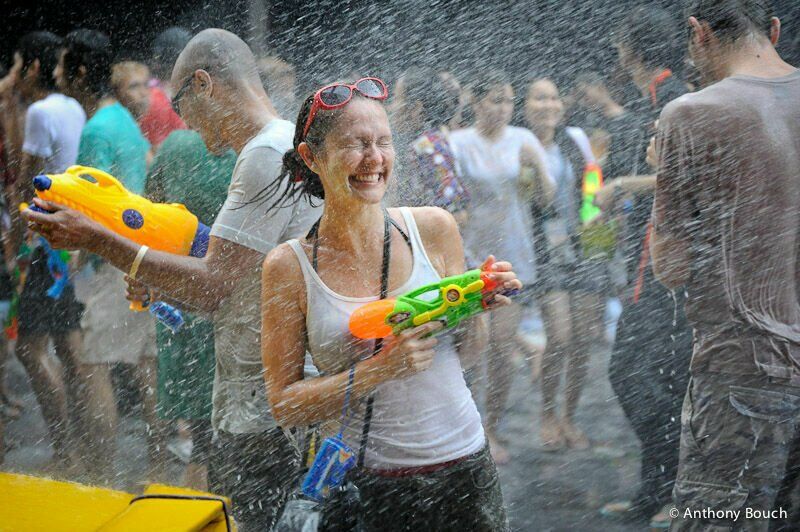
Songkran, or the Thai New Year, is the the largest and most famous of Thailand’s many traditional festivals. Known for huge water fights and water blessing ceremonies, it’s been celebrated for centuries and is rich in culture and tradition. Every year, the celebrations begin on April 13 and normally last three days until the 15th of April.
The name was inherited from ancient Sanskrit, a language that dates back thousands of years. Songkran combines the words “Song” and “Krant” and refers to the sun beginning a new Zodiac sign. Songkran translates to “entering” and “stepping into.” It’s when the sun exits the sign of Pisces and enters the sign of Aries. “Songkran month” is the event that occurs every month. But according to astrology, when the sun reaches Aries again after 12 months have passed, it’s known as “Songkran year” and will be the solar New Year’s Day.
The festival is highly dependent on water, which symbolically washes away the previous year, allowing people to prepare for the new year. It’s also a time of family reunion, when relatives who have moved away return for the holiday to spend time with their loved ones. During the festival, various traditions are celebrated; but the one tradition it’s most famous for is water splashing. Thai locals and travellers alike drench each other with water using hoses, squirt guns and any other water carrying container.
Locals believe that water is purifying and cleansing: it washes away negativity and problems, and brings good fortune and happiness. According to tradition, the festival began with villagers collecting water that had been poured over Buddha statues for purification. This was then used to bless leaders and family members who were well respected by sprinkling it over their shoulders. A similar tradition continues today with the water blessing ceremony, in which people fill shells with purified water and pour it on the hands of their elders as a sign of blessing and respect.
Songkran is a festival in which family members gather to express gratitude, love and respect, as well as to make merit and pay respects to their ancestors. Giving food to monks is a way of gaining merit. Visiting temples and listening to Buddhist speeches are also both considered a blessing during Songkran. Thais go to temples to pray and bring food to the monks. Locals splash scented water on Buddha statues when visiting different places. Many people also like spreading positive vibes by releasing caged birds into the sky or fish into bodies of water. This occurs throughout the country.
The northern city of Chiang Mai hosts the largest Songkran celebrations, with some events reportedly lasting six days. The infamous Khao San Road is the obvious centre of activities during Bangkok’s modern Songkran festival. The atmosphere in the backpacker zone is electrifying.
In a normal, non-pandemic year, it’s hard to leave your accommodation, whether a hotel or a condo, without experiencing the water soaking chaos and any resistance will quickly fade. On the streets, you’ll find multiple generations getting in on the fun, including children, adults, the elderly and trucks full of teenagers blasting loud music.
Songkran is a national holiday in Thailand. It’s a time for locals who have relocated to other cities or towns to return home and spend time with their families. So if you’re travelling to Thailand during this time, it’s smart to plan ahead because public transportation tends to be packed and accommodations fully booked — at higher than normal prices.
Source - The Thaiger
VISA AGENT / How to register for: THAI PASS - TEST & GO
Thursday, 31 March 2022
Songkran 2022: Bangkok allows “traditional water sprinkling”
No foam parties or powder smearing will be allowed in Bangkok during Songkran next month, but when it comes to water splashing on the Thai New Year, known for massive water gun fights, the rules are a bit vague. “Traditional water sprinkling” is allowed, but officials did not go into detail about what exactly that means.
The Bangkok Communicable Disease Committee decided to allow “water sprinkling” in specific areas that have sought permission, and organisers must abide by “Covid Free Setting” measures set by the Centre for Covid-19 Situation Administration. Participants must stay at a Covid-safe distance of four metres and wear face masks. No alcohol is allowed.
The committee met yesterday to discuss petitions from local businesses to allow Songkran parties to beheld in popular tourist areas like Khao San Road. At the meeting, the Bangkok Metropolitan Authority decided to permit “traditional water sprinkling” activities within a “Covid Free Setting.” Water splashing in public areas and roads is prohibited.
If a Songkran event is expected to exceed a thousand people, the event organiser must obtain permission from the BMA’s Health Department, while local district authorities will grant permission for events with less than a thousand participants.
So far, the administration has received no more than eight requests from private firms and temples seeking permission to hold Songkran activities on their private grounds. Meanwhile, 46 out of Bangkok’s 50 district offices had declared they wouldn’t hold Songkran celebrations, and the other four district offices have not yet announced their decision, the Bangkok Post reported.
Earlier, the CCSA had agreed that water splashing and traditional water pouring as a blessing would be allowed at organised events — as long as there is no alcohol and events are under “Covid Free Setting” measures. Water splashing is not allowed on public areas, like roads. The government is focusing on allowing water splashing and pouring as a blessing at traditional Songkran events rather than the massive water fights the Thai holiday is internationally known for.
On Thursday, business owners in Bangkok’s popular walking street, Khao San Road, teamed up with tourism professionals from Pattaya, Phuket and Chiang Mai to draft and submit a joint petition urging the CCSA to repent of its party foul, fearing a loss of income.
The group has proposed a list of measures for screening and limiting Songkran party participants, according to the president of the association of business operators on Khao San Road, Sa-nga Ruangwatthanakul.
“We will put in place measures to handle party-goers on the 400-metre stretch of Khao San Road. We want to explain to the government that the country is trying to welcome tourists back, particularly in the summer when the Songkran festival will be held.”
“But the famous water splashing is banned. With such a ban, how can we attract them to the country? We ask the government to allow the activity on April 12 to 15 to promote the festival.”
Bangkok’s communicable disease committee met on Monday to consider their request and announced their decision on yesterday. Clerk Khachit Chatchawanit said the committee would “consider what is best for Bangkok residents.”
According to the law, provincial communicable disease authorities may ask the CCSA’s operations centre to remove the unpopular Songkran restrictions, which will then pass them on to the CCSA, according to the director-general of the Department of Disease Control, Opas Karnkawinpong.
The current Songkran precautions outlined by the Public Health Ministry say that festivities can still be held, albeit without the classic chaos of water fights and powder smearing in public, as well as no alcohol sales, according to a spokesperson for the CCSA, Apisamai Srirangson.
“Songkran events can still be held as long as the right precautions are taken, and people can travel to other provinces to visit their relatives and take part in traditional activities there.”
The CCSA’s current restrictions also encourage festival observers to practice traditional activities without water, such as bowing to elders at a distance of at least a metre, instead of pouring water on their hands as a sign of respect and blessing.
The restrictions, though well-meaning, fail to take into account the elderly’s desire to be blessed and honoured by their younger relatives, while also reflecting logical fallacies about the spread of Covid-19 among family members.
Notably, the water blessing ceremony usually takes place outside, where there is plenty of wind and UV light. Also, the ceremony only lasts for a moment, and everyone involved can wear masks, as is already normal practice in Thai society.
Source: Bangkok Post / The Thaiger
VISA AGENT / How to register for: THAI PASS - TEST & GO
Wednesday, 30 March 2022
Tourism Council of #Thailand calls for PCR testing on arrival to be dropped asap
Tourism businesses in Thailand are struggling to survive and barriers to increasing the number of foreign visitors to the kingdom must be removed immediately. That’s the view of Chamnan Srisawat from the Tourism Council of Thailand, who says the Omicron variant, coupled with Russia’s war on Ukraine, has dealt a double blow to the sector.
“Tourism operators are still struggling to maintain business as the number of tourists has yet to fully rebound due to the current travel rules. This obstacle needs to be removed before more operators collapse.”
The Bangkok Post reports on the findings of a recent TCT poll that surveyed 200 overseas travellers in the period from February 20 to March 10. Of those questioned, 71% agreed the process around the PCR test on arrival is cumbersome.
Chamnan says if Thailand’s tourism industry is to survive, it needs to retain 40% of its 2019 level of business this year. That’s 1.2 trillion baht in revenue, from 16 million tourists and 75 million domestic trips. He adds that in order to achieve this, the onerous Thailand Pass registration process and PCR testing on arrival needs to go as soon as possible.
According to the Bangkok Post report, TCT’s tourism confidence index during the first quarter of 2022 stood at 44, which was a big improvement from 36 during the same period in 2021. However, it’s still down from 47 during the last quarter of 2021. Any reading below 100 indicates weak tourism confidence among those in the sector.
740 tourism operators participated in the survey and its findings show that confidence is lowest among nightlife operators, who have been the most severely affected by Covid restrictions. The confidence level among those businesses is at 20, down from 41 during the same period in 2021.
According to Chamnan, 78% of tourism operators are struggling to increase their revenue, with 45% reporting a decrease and 33% only just managing to maintain the same level of income as during the last quarter of 2021. Entertainment venues were the worst affected, with around 44% planning to lay off workers in the second quarter of this year. They were followed by spa businesses, massage parlours, and tour operators.
Source - Bangkok Post / The Thaiger
VISA AGENT / How to register for: THAI PASS - TEST & GO
Tuesday, 29 March 2022
Lufthansa reopens Bangkok Munich route
Lufthansa is offering customers daily flights between Bangkok and the Bavarian capitol Munich beginning with this year’s summer schedule on 27 March. These flights replace service to Frankfurt during the winter.
The initial Lufthansa flight schedule is as follows:
* Bangkok – Munich / Flight LH773 / departure: 11 p.m. local time, arrival: 5.20 a.m. local time
* Munich – Bangkok / Flight LH772 / departure: 10:45 p.m. local time, arrival: 2:10 p.m. Bangkok local time
The aircraft operating these services is the most modern in the world: the Airbus A350-900 that has set high standards in fuel-efficiency and passenger comfort. It offers 48 lie flat seats in Business Class, 21 in Premium Economy and 224 Economy Class seats.
Munich – Bangkok, however, is not the only service Lufthansa Group, Europe’s largest airline group, will offer Thai customers. The Group’s other premium carriers, SWISS and Austrian Airlines, will also connect Thailand with the heart of Europe. In the summer schedule, SWISS will fly six times weekly between Bangkok and Zurich while Austrian Airlines will fly daily between Bangkok and Vienna.
READ MORE - Bangkok-Jack
VISA AGENT / How to register for: THAI PASS - TEST & GO
Sunday, 2 January 2022
Tourism Ministry Launches ‘Thailand Trusted Destination’ Campaign
Krabi (NNT) - The Ministry of Tourism and Sports has launched the “Thailand Trusted Destination” campaign to raise the nation’s tourism standards. Visitors can now look for venues and attractions bearing the campaign’s dancing elephant logo. The logo certifies attractions that meet the standards promoted by the ministry.
The Department of Tourism under the Ministry of Tourism and Sports took business operators on a field trip to Krabi province to observe venues and attractions certified under the Thailand Trusted Destination campaign.
The campaign was introduced as an incentive for business owners to improve their services and boost confidence among tourists. Participating venues will be granted the dancing elephant logo, which represents cleanliness, safety, fairness, good management, and green practices.
During the field trip, business operators visited Krabi International Airport, which has been certified for toilet cleanliness; Laemsak Community which was certified as a community-based tourism attraction with historical value; and Than Bok Khorani National Park, which has been certified for its success in environmental conservation and tourist safety.
Source - ASIAN NOW
VISA AGENT / How to register for: THAI PASS
.
Sunday, 12 December 2021
Thailand set to approve Special Tourist Visa for digital nomads
Thailand is preparing to accommodate an increasing number of “digital nomads” with eyes on Bangkok, Phuket and Chiang Mai as work and vacation destinations.
Spokesperson for the Prime Minister’s Office Thanakorn Wangboonkongchana said the three cities were ranked by Germany-based vacation search engine company Holidu on its list of the best ‘workation’ cities in 2021. One of the groups included in the survey comprised workers who travel to different locations, using mobile devices to perform their jobs remotely at coffee shops or public libraries.
A recent survey by the Adventure Travel Trade Association found Thailand to be among the most popular destinations for these digital nomads. Respondents cited blazing internet speeds, affordable living costs, and scenic tourist attractions are some of the factors that attracted them to the Kingdom, especially with so many others now working remotely due to the global pandemic.
The spokesperson said the government is working to accommodate the increasing numbers of digital nomads by approving a Special Tourist Visa (STV) that allows foreigners to stay for 90 days.
The visa can be extended twice, meaning tourists can stay up to 270 days at a time. The government hopes that STVs will help revitalize the tourism industry under effective COVID-19 control and prevention measures.
Meanwhile, Prime Minister Gen Prayut Chan-o-cha has commended relevant agencies and the Thai people for making Thailand one of the best destinations for travelers. He also assured that the government would be ready to listen to all constructive feedback in order to draft policies that benefit everyone.
Source - ASIAN NOW
VISA AGENT / How to register for: THAI PASS
.
Thursday, 9 December 2021
Thailand doesn’t want ALL the tourists back
But now, with tourism set to start up once again, the country is not sure it wants the same type of visitors to return to its shores.
Historically the country has attracted a huge number of tourists, from unruly gap year backpackers to large tour groups who show little care for the environment.
Now Thailand wants to move on from its ‘hedonistic’ history of mass tourism, with Tourism Minister Phiphat Ratchakitprakarn stating the focus should be on “high-end travellers, rather than a large number of visitors.”
One location that would be glad to see change is the Phi Phi islands, world-renowned for their white beaches and clear blue waters. While lockdowns kept international travellers away, this region was quietly recovering from years of overtourism.
Before the pandemic, Phi Phi National Park saw more than 2 million visitors every year with 6,000 people a day making the trip to the world-famous Maya Bay. This uncontrolled mass tourism left the region’s delicate ecosystem in disarray.
“The coral cover has decreased by more than 60 per cent in just over 10 years,” Thon Thamrongnawasawat of Kasetsart University in Bangkok tells AFP.
The problem got so bad that in 2018, Thon pushed authorities to close part of Maya Bay. It has been closed ever since and, with strict travel restrictions meaning visitor numbers in the region dwindled to almost zero, nature has started to recover.
Endangered whale sharks have been seen off the coast, turtle species have returned and more than 40 per cent of the coral fragments replanted in Maya Bay have survived.
Thon calls it “a very satisfactory figure obtained thanks to the absence of visitors.”
To make a full recovery though, these coral reefs would need another two decades without visitors. (continues)
Source BangkokJack
VISA AGENT / How to register for: THAI PASS
.